 | |
| Compiled by: Karel van der Waarde 2024 | |
| | |
| |
| | |
| Colofon & notes | |
|
|
EU Organic logo
The organic logo is described on a EU website as: ‘The European Union organic logo gives a coherent visual identity to organic products produced in the EU. This makes it easier for consumers to identify organic products and helps farmers to market them across the entire EU.’ Furthermore: ‘The logo is compulsory for most organic products and must be displayed according to a specific set of rules. This is to prevent consumer confusion, help maintain trust in organic food and support the authorities in their inspection regimes.’ The EU organic logo is introduced by the Commission Regulation (EU) No 271/2010 of 24 March 2010. Its use is governed by Article 57 of Commission Regulation (EC) 889/2008.

Zee E van der, Fischer A. (2018) ‘Green Pictograms on EU Foods: A Legal Study Informed by Behavioural Science’. Journal of European Consumer and Market Law. 7(1), 15-22. [Website].
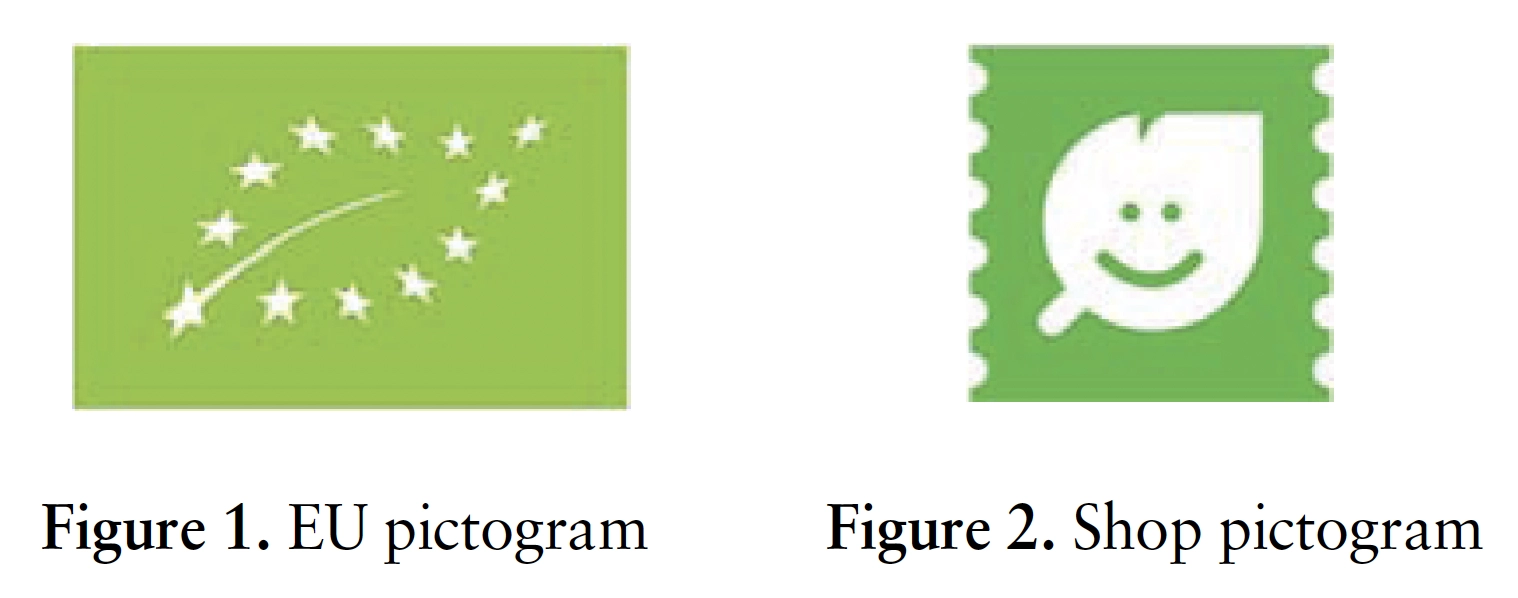
Aim: The objective of this study is to examine whether and how the application of the normative EU “average consumer” benchmark could be informed by behavioural sciences, in the doctrinal assessment under the FIR of possibly misleading, purely visual information, as used by green pictograms.
People: Two studies. 70 Dutch students + 122 Dutch students.
Method: Legal analysis, two experiments.
Effect of visuals: 98% did not recognise the shop pictogram, 46 did not recognise the EU Ecolabel. Either pictogram suggested that the product was more organic than the product without a pictogram, and that no differences between the two pictograms were identified by the study participants.
Suggestions for design: The materials used visual information without text.
Suggestions for policy: None.
Comment: A clear study that ‘user testing’ can give an indication what ‘an average consumer’ is. This could help in court cases to determine if a pictogram is misleading.
Risius A, Janssen M, Hamm U. (2017) ‘Consumer preferences for sustainable aquaculture products: Evidence from in-depth interviews, think aloud protocols and choice experiments’. Appetite. 113, 246-254. [DOI].
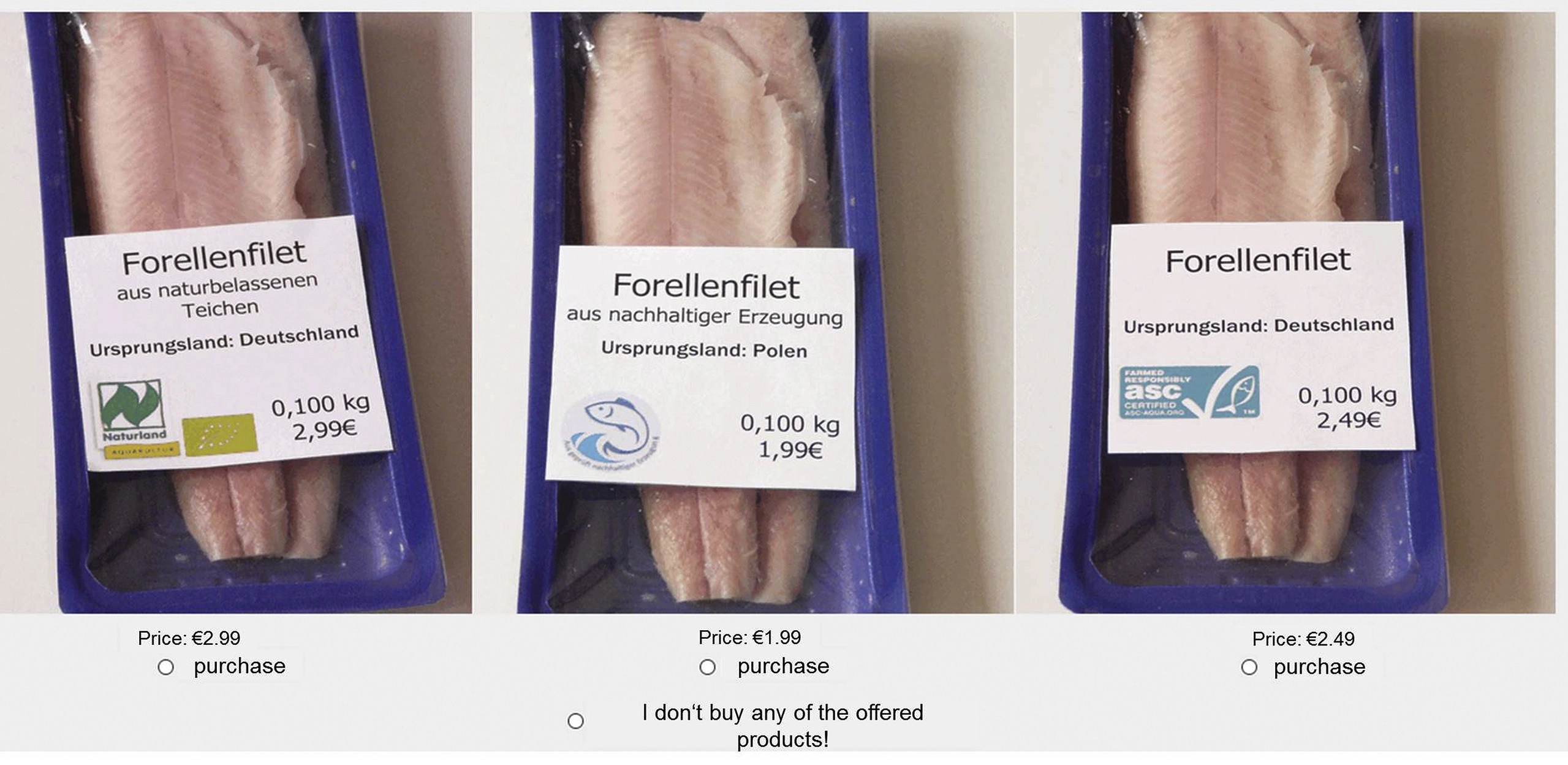
Aim of visuals: Information about sustainable fish on packaging
People: 459 German consumers in three cities
Method: Mixed: face-to-face interviews, thinking aloud protocol, quantitative on screen choice experiment.
Effect of visuals: In the qualitative part of the present study, claims and claimed characteristics were mostly criticized for being imprecise. The EU organic label was recognized by 48% of consumers, but only trusted by 22%.
Suggestions for design: Page 252: ‘Since several consumers had difficulties finding the declaration of origin on many test products used in the qualitative study, the declaration of origin should be improved visually; it should be clear, transparent and easy to find.’
Suggestions for policy: ‘Communication measures and labelling schemes should be improved to increase consumer
acceptance and make a decisive impact on consumers' buying behavior.’
Comment: The face-to-face interviews revealed comments about the labels about typesize and trust that were not made in the quantitative part.