 | |
| Compiled by: Karel van der Waarde 2024 | |
| | |
| |
| | |
| Colofon & notes | |
|
|
Labels indicating the nutritional values of food.
The provision of information about the nutritional profile of foods has been heavily investigated by a large number of studies. [A comprehensive overview by the EU Joint Research Centre was published in 2020. The design of information varies substantially. The discussion about its value is ongoing. Below are just a few articles about:
• Nutri-score (France, since 2017) based on the
Food Standards Agency nutrient profiling system (FSAm-NPS). (see Julia & Hercberg, 2017 about the history and calculation).
• Ingredient lists
• Several traffic-light labels
• Keyhole logo
• Heart/health logos
• Healthy choice
• Nutrinform Battery.

Julia C, Blanchet O, Méjean C, Péneau S, Ducrot P, Allès B, Fezeu LK, Touvier M, Kesse-Guot E, Singler E, Hercberg S. (2016) ‘Impact of the front-of-pack 5-colour nutrition label (5-CNL) on the nutritional quality of purchases: an experimental study’. International Journal of Behavioral Nutrition and Physical Activity. 13, 101. [DOI].
Aim of visuals: To promote healthier diets in the population.
People: 901 participants in France.
Method: A shopper laboratory store (realistic shopping environment). Task: buy breakfast cereals, sweet biscuits, and appetizers.
Effect of visuals: These results suggest that the 5-Colour Nutrition Label (CNL) Front-of-Packaging (FOP) nutrition label may have a limited impact on purchases, leading to healthier food choices in some food categories such as sweet biscuits. + the effect of the 5-CNL label was differential according to the type of product.
Suggestions for design: The use of colour is thought to promote awareness and understanding, in particular when using green and red cues, which are immediately
used as alert signals by consumers.
Suggestions for policy: The importance of wide multimedia communication campaigns to
accompany the introduction of a FOP label nationally, to ensure high awareness in the consumer, which precedes active use of the label in the population.
Comment: Several issues. Over 65 years is one group. Not illustrated (unknown design). Which green? Which red?
Santos O, Alarcão V, Feteira-Santos R, Fernandes J, Virgolino A, Sena C, Pacheco Viera C, Gregório M J, Nogueira P, Graça P, Costa A. (2020) ‘Impact of different front-of-pack nutrition labels on online food choices’. Appetite. 154, 104795. [DOI].
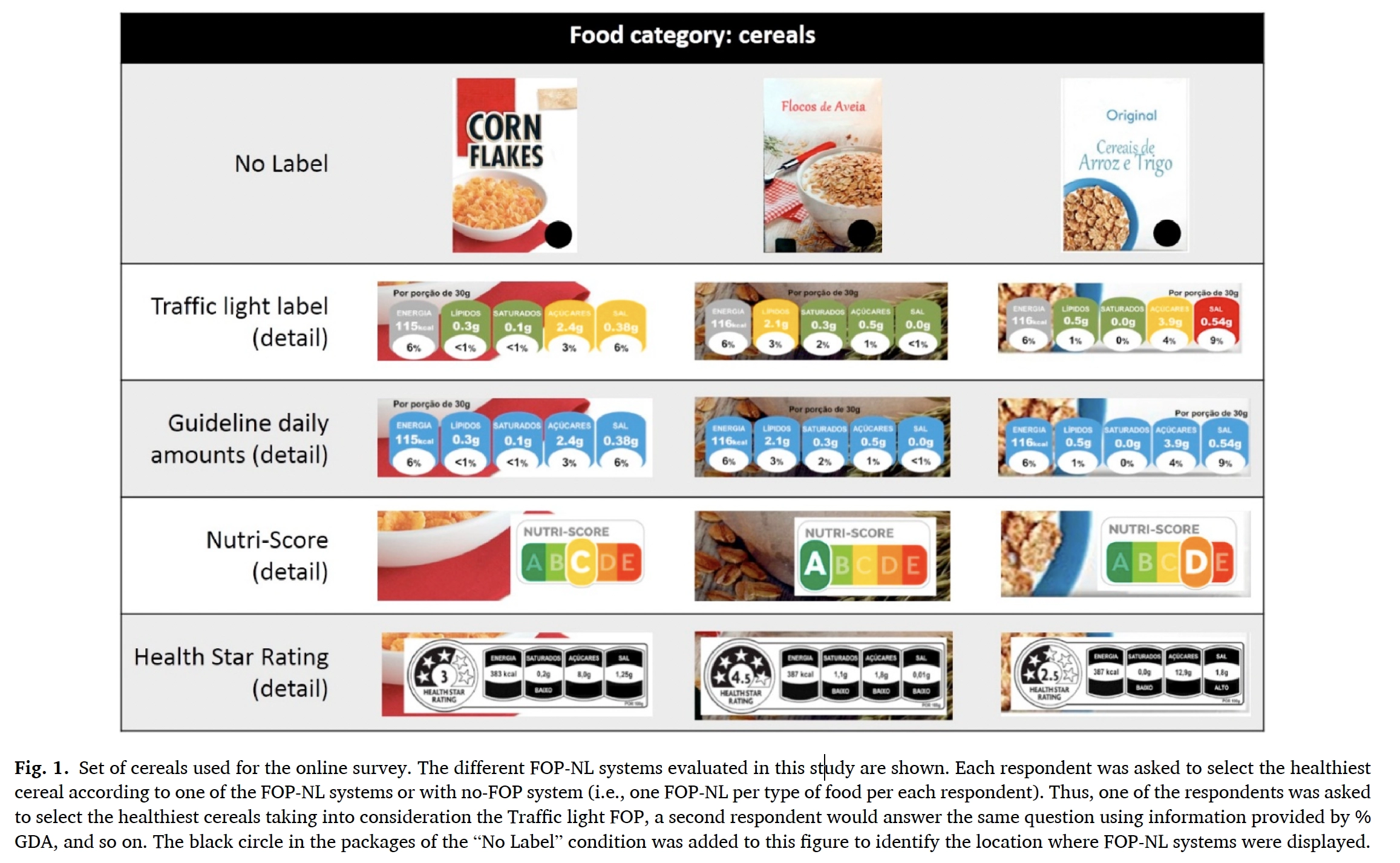
Aim of visuals: Prompting healthier food choices. Investigating 4 nutrition labels.
People: 357 Portuguese adults
Method: 475 telephone interviews, 357 web based questionnaires.
Effect of visuals: Front-of-pack nutrition labels (FOP-NL) system promotes healthier food choices or related outcomes, such as consumers’ perception of food healthiness
Suggestions for design: None.
Suggestions for policy: ‘Find the adequate balance between reducing nutritional information to its adequate functional essence (this implies health literacy skills, cognitive load and time to decide), on one hand, and providing enough information to make an informed choice, on the other hand (especially important for persons with common health disorders – e.g., hypertension or diabetes).’
Comment: Portuguese situation differs. Not ‘real life situation.’ The supplementary information provides five visual examples for cereals, biscuits, yogurts, lasagna, and canned tuna.
Graham DJ, Orquin JL, Visschers VHM. (2012) ‘Eye tracking and nutrition label use: A review of the literature and recommendations for label enhancement’. Food Policy. 37(4), 378-382. [DOI].
Aim of visuals: To promote healthy eating
People: -
Method: eye tracking
Effect of visuals: Improve consumers’ ability to locate and effectively utilize nutrition information.
Suggestions for design: Certain nutrition label characteristics may impede consumer detection and comprehension of labels.
Suggestions for policy: Reducing the number of total features found on food packaging could increase consumer
attention to the nutrition label independent of any changes to the label itself. Mandatory front-of-package labeling could be one policy recommendation based on this research.
Comment: Review of eye-tracking studies. The conclusion (page 382): ‘The extant eye tracking research objectively measuring nutrition label use provides several suggestions for modifying food packaging in general and nutrition labels in particular to increase consumers’ ability to easily locate and comprehend nutrition information.’ The article suggests that ‘easily locate’ and ‘comprehend’ are independent of readers, design, and context: do al readers really find and understand information in a similar manner?.
Stiletto A, Cei L, Trestini S. (2023) ‘A Little Bird Told Me ... Nutri-Score Panoramas from a Flight over Europe, Connecting Science and Society’. Nutrients. 15, 3367. [DOI].
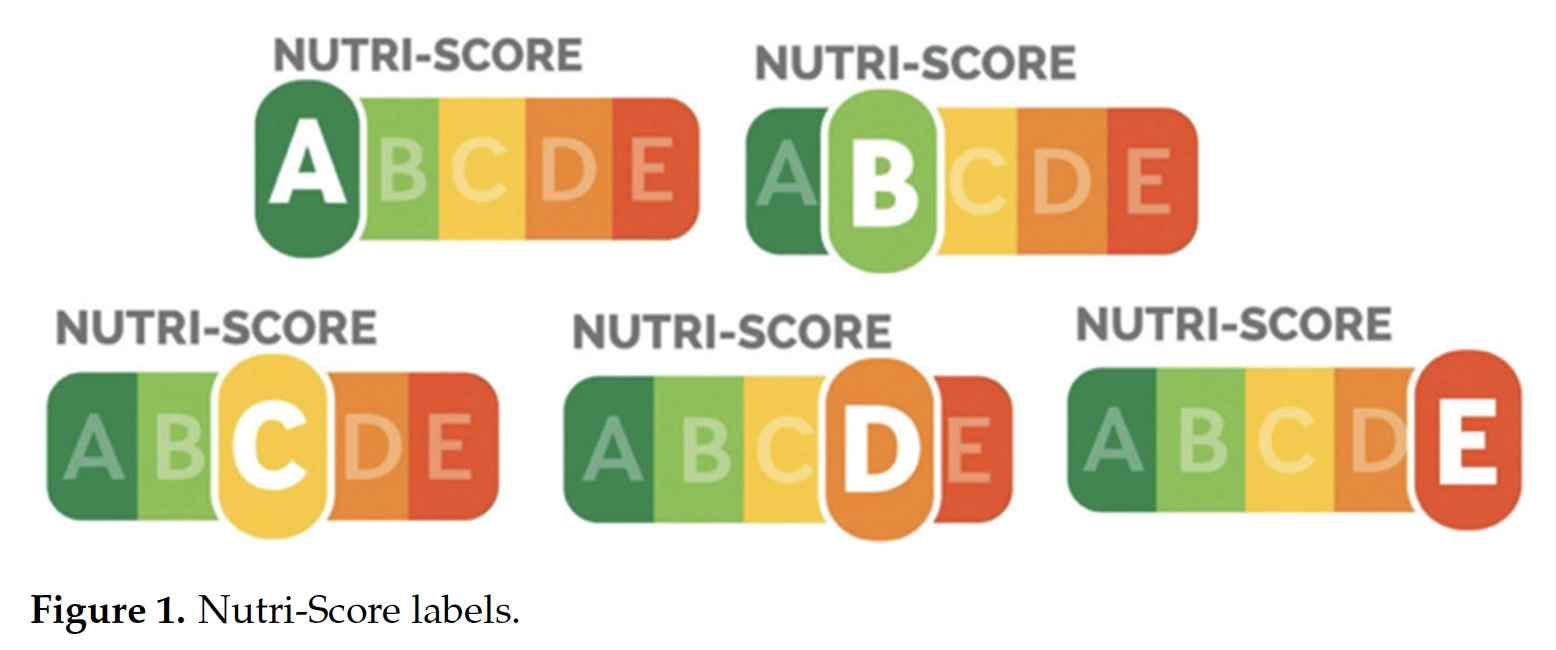
Aim of visuals: These labels, providing concise and easy-to-understand information about the nutritional profile of foods on the front of the pack, have a double goal: to help consumers to identify the overall nutritional quality of food, thus guiding them towards healthier food choices and to encourage food industries to reformulate and improve their products.
People:
Method: Literature review of 150 articles, and twitter account in four countries: France, Germany, Italy, Spain.
Effect of visuals: A recurrent finding, however, is that Nutriscores succeeds in increasing the purchase of healthy products, but it does not alter the purchase of unhealthy ones.
Suggestions for design: None.
Suggestions for policy: This evidence suggests that any policy decision on the issue should be accompanied by communication activities aimed at informing consumers and stakeholders about what the NS is, how it works, and how to properly use it.
Comment: The idea that ‘these labels provide concise and easy-to-understand information’ cannot be generalised across any population. The visual design is not discussed? Is it really possible to represent all ‘nutritional values’ into a single 5-scale letter? Is this nutritional value identical for people?
Buttriss JL. (2018) ‘The role of nutritional labelling and signposting from a European perspective’. Proceedings of the Nutrition Society. 77, 321–330. [DOI].
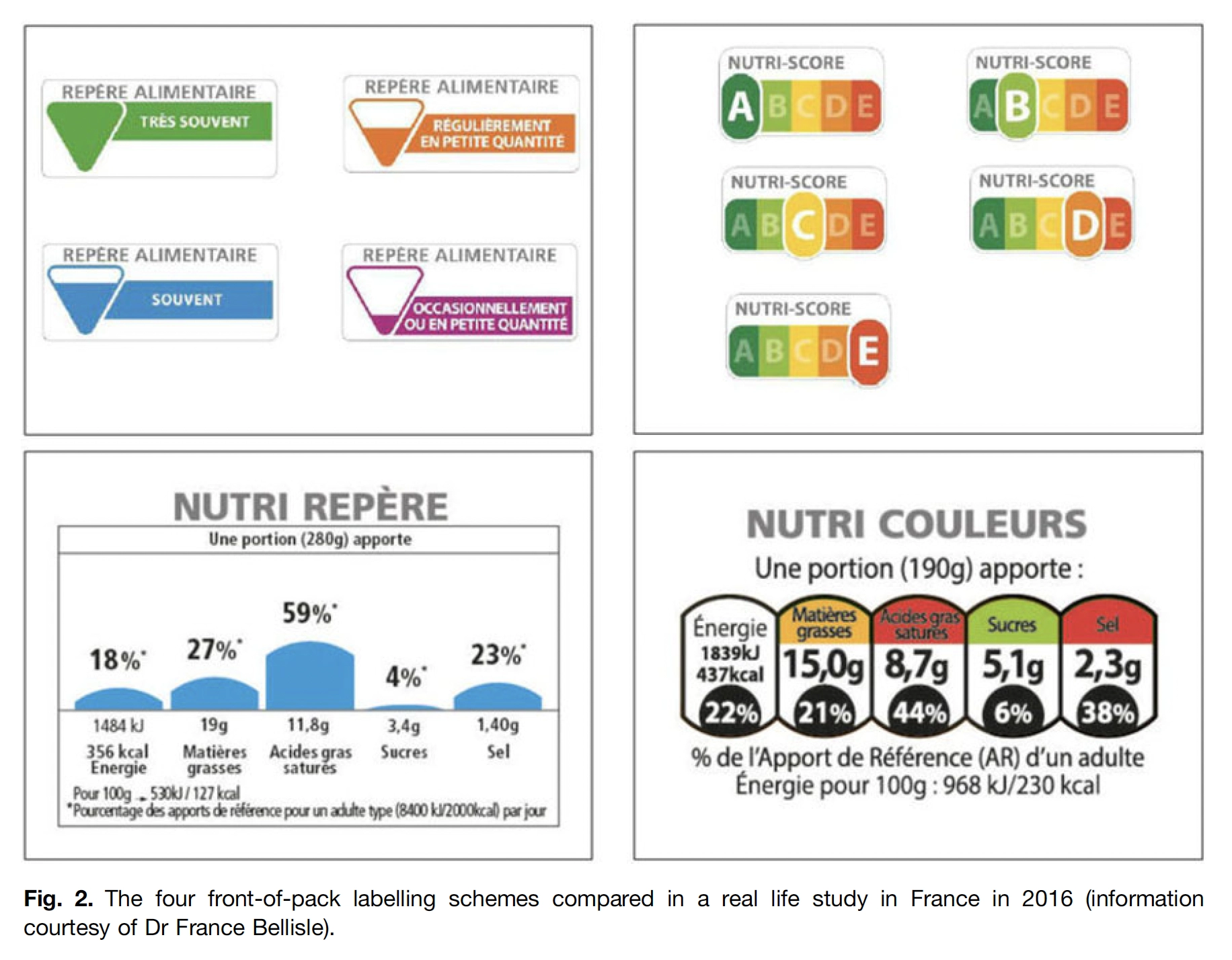
Aim of visuals: Nutrition information on food labels has been considered a means of encouraging customers to make healthier choices when shopping for food.
People: Overview of studies: p325: ‘Do shoppers use information on food labels’?
Method: Literature review
Effect of visuals: Variable, depending on siuation: shopping, online shopping, eating out, ... Studies to date have found that influence of nutrition labelling on food purchasing decisions is weak, especially when compared with taste, price, use by date, brand, convenience and family preferences.
Suggestions for design: None?
Suggestions for policy: ‘A wealth of information is now provided on food packaging, which is broadly understood by those who use it but is not as widely utilised as it might be to inform choice.’
Comment: This review nicely highlights the differences in context, different types of consumers, and different questions consumers have.
Siegrist M, Leins-Hess R, Keller C. (2015) ‘Which front-of-pack nutrition label is the most efficient one? The results of an eye-tracker study’. Food Quality and Preference. 39, 183-190. [DOI].
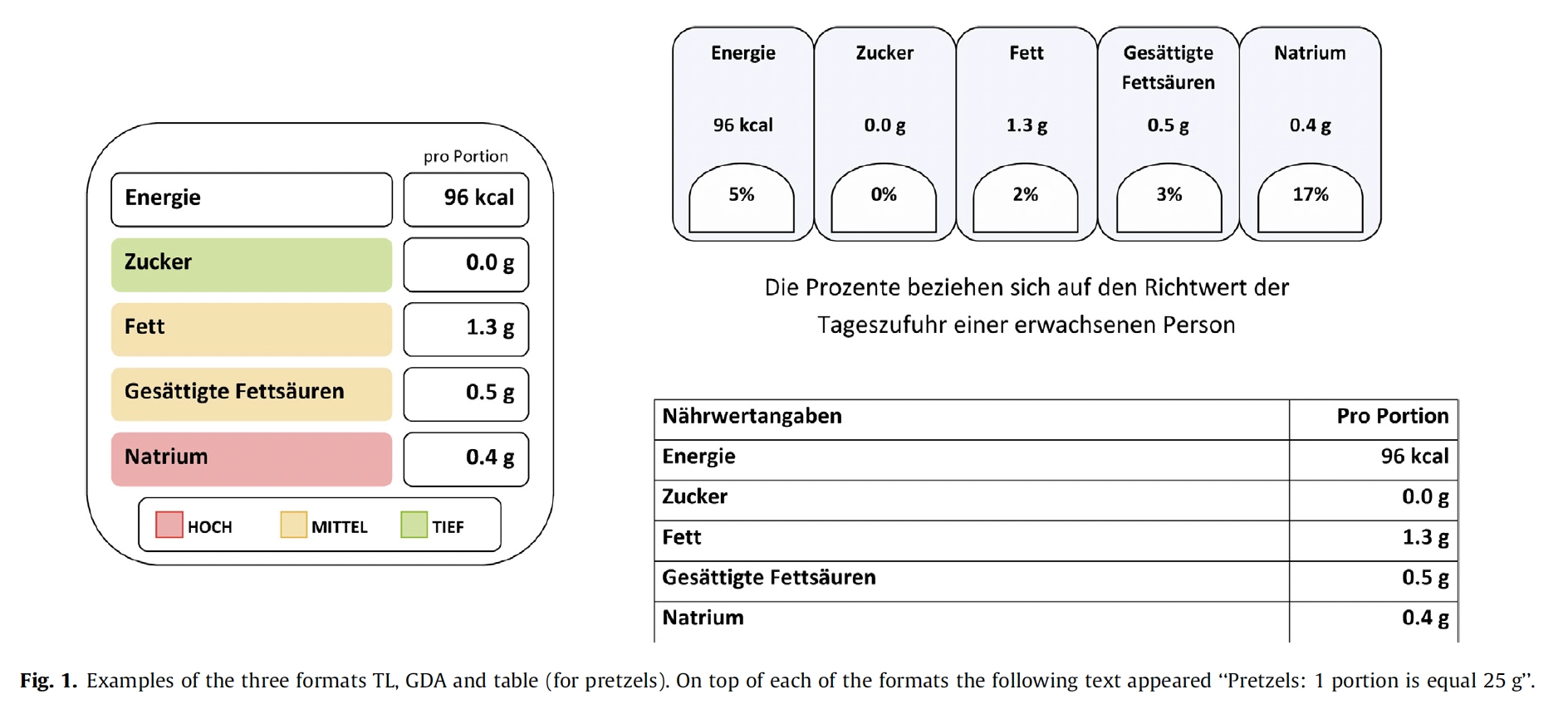
Aim of visuals: Help consumers make more healthy food choices: to better distinguish healthy food from less healthy ones.
People: 98 individuals, Switzerland.
Method: Eye-tracking study
Effect of visuals: The present study suggests that both the traffic light (TL) and the guideline daily amounts (GDA) labels are formats that consumers can efficiently process and that may be helpful for selecting foods. The GDA format seems to require more informationprocessing time.
Suggestions for design: There is a lack of agreement about how nutrition information on food packages should be designed in order to help consumers make good decisions
Suggestions for policy:
Comment: The visual design of the test materials differs substantially from the standard design. This influences the outcomes. The authors did not mention this and describe: ‘The stimuli were designed using word processing software (Microsoft Word 2003), saved as a picture document, and then transferred to the stimulus presentation software (SensoMotoric Instruments [SMI] Experiment Center 3.0).’
Muller L, Prevost M. (2016) ‘What cognitive sciences have to say about the impacts of
nutritional labelling formats’. Journal of Economic Psychology. 55, 17-29. [DOI].
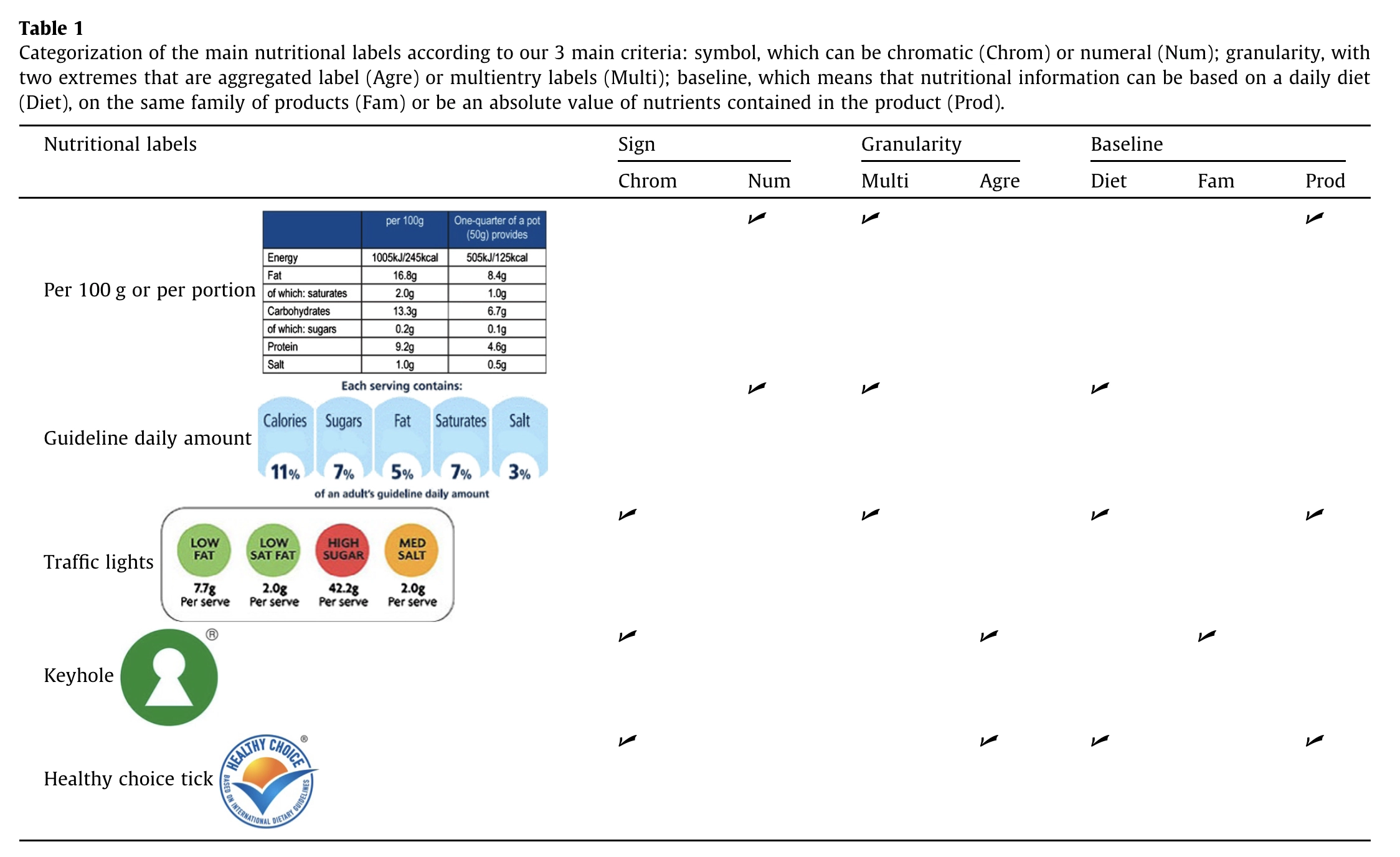
Aim of visuals: Efficiently convey nutritional information in order to modulate people’s behaviour.
People: Description of cognitive processes.
Method:
Effect of visuals: Based on criteria that discriminate labels: sign, granularity, baseline.
Suggestions for design: Numbers processing is effortful and requires potentially more cognitive resources than colours processing. Numbers have to be read, understood, and a threshold has to be chosen. On the contrary, colours are automatically processed and the threshold is included (built) in each colour perceived.
Suggestions for policy:
Comment: Interesting unusual approach. It concludes on which labels are cognitively the less effortful and the quickest to process.
Jürkenbeck K, Sanchez-Siles L, Siegrist M. (2024) ‘Nutri-Score and Eco-Score: Consumers’ trade-offs when facing two sustainability labels’. Food Quality and Preference. 118, 105200. [DOI].
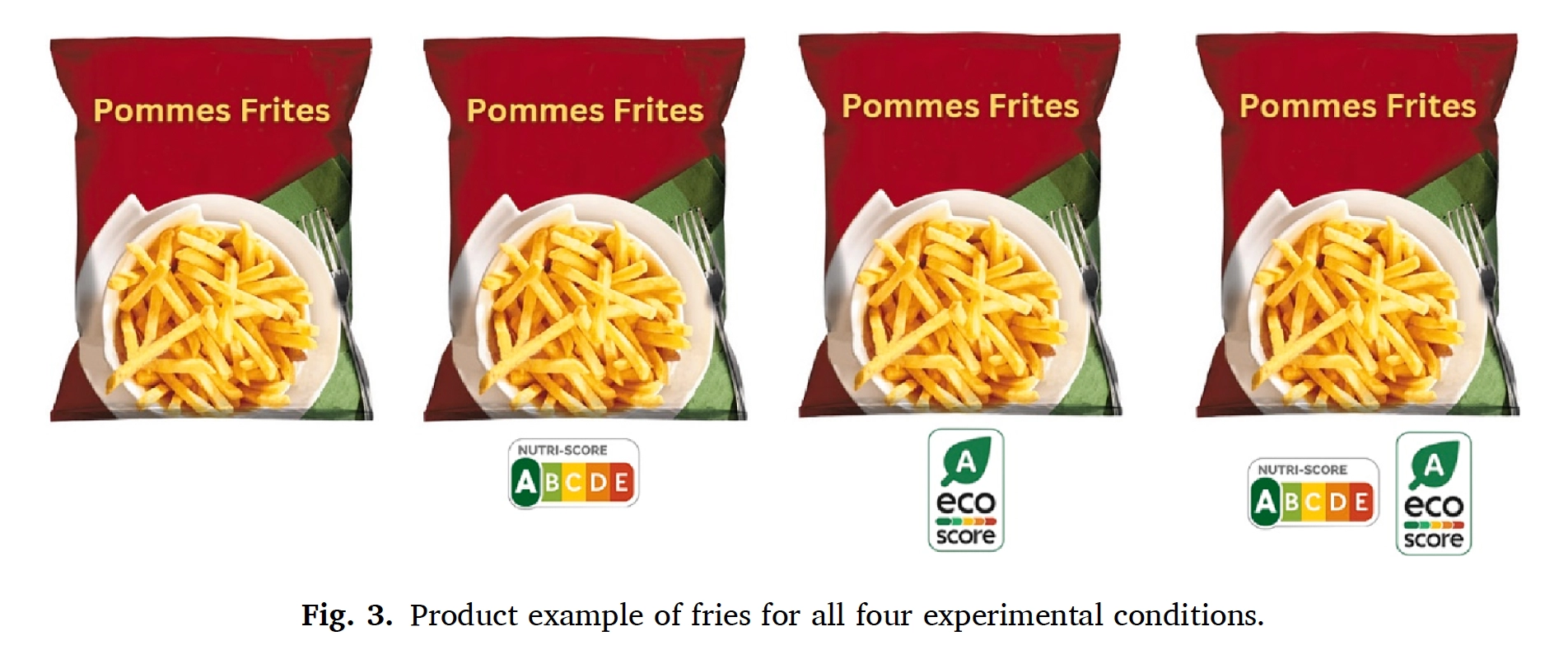
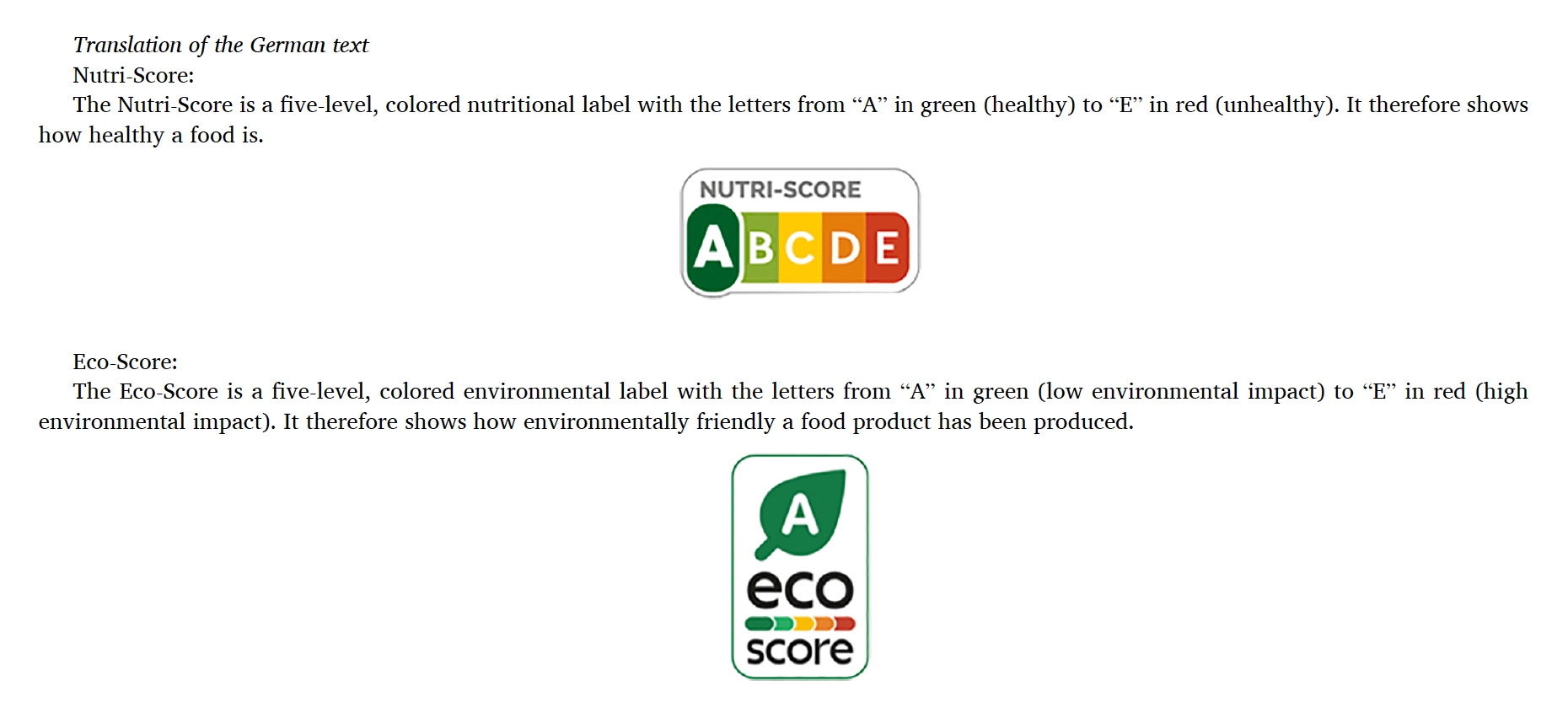
Aim of visuals: Do Nutri-Score and Eco-Score influence eachother?
People: Germany: 1061 participants
Method: Online survey. Four food products: no score, nutri-score, eco-score, both.
Effect of visuals: The results show that the Nutri-Score and Eco-Score influence each other’s perceived healthiness and perceived environmental impact assessment of consumers.
Suggestions for design: none
Suggestions for policy: In the presence of a growing number of sustainability front-of-pack labels in the market which may be incomprehensible and confusing for lay people, more efforts are needed from policy makers to communicate and explain their characteristics. The results cast some doubts on the implicit assumption of governmental agencies that introducing new labels that provide information about the foods will results in a more accurate consumer perception.
Comment: The design of the scores/colour symbol is not discussed. Is this really the best visual format? Why does the eco-score differ from the nutri-score? And how does this eco-score differ from the EU-Green leaf and the EU-Eco label? I also would question any nutri-score on french fries.
Sonntag WI, Lemken D, Spiller A, Schulze M. (2023) ‘Welcome to the (label) jungle? Analyzing how consumers deal with intra-sustainability label trade-offs on food’. Food Quality and Preference . 104, 104746. [DOI].
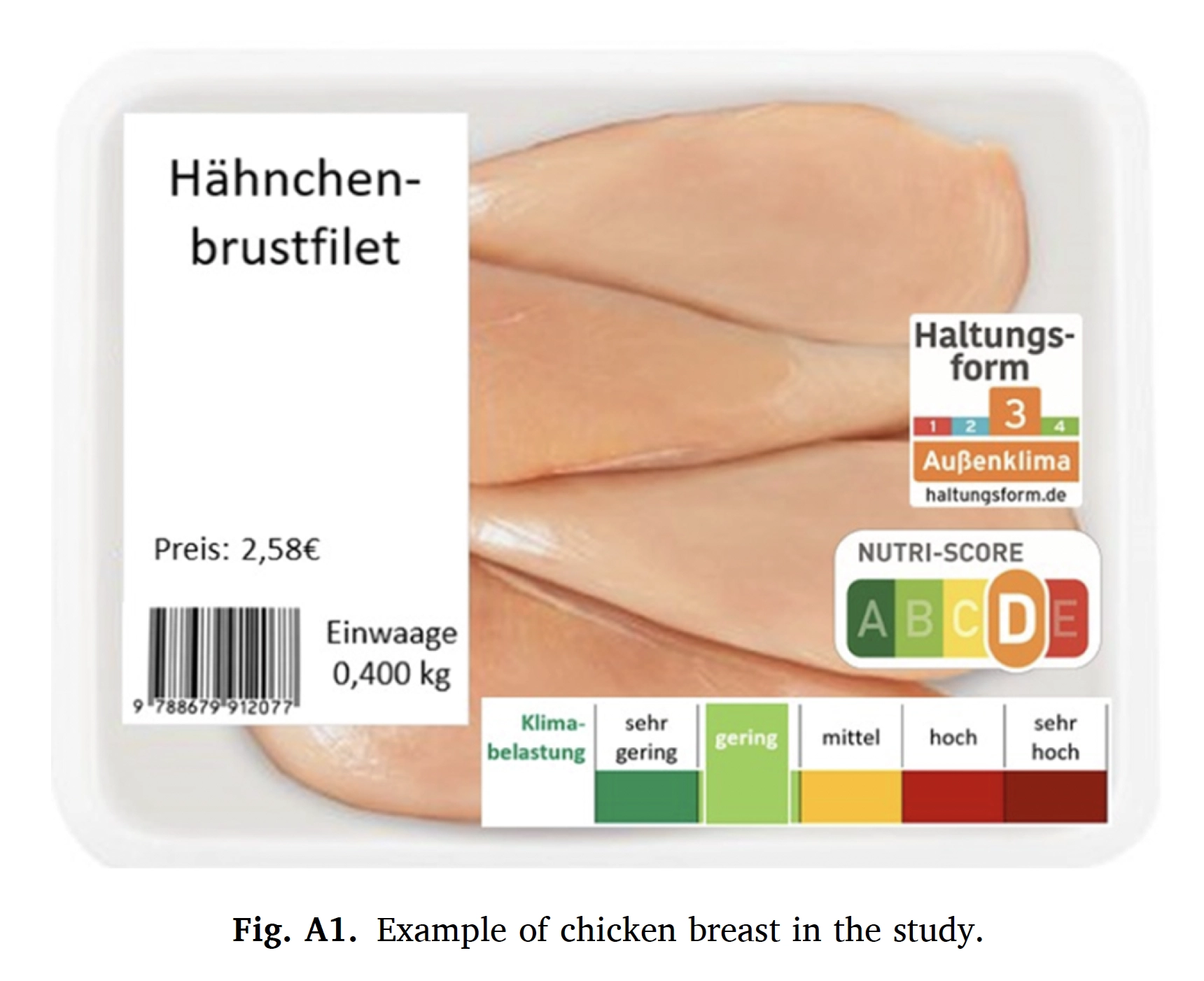
Aim of visuals: Sustainability labels about the production process.
People: Germany: 985 participants.
Method: Online questionnaire.
Effect of visuals: At least for a combination of two labels, consumers seem to be able to cope even with
contradictory information.
Suggestions for design: For manufacturers, this means that they should avoid scoring negatively on any sustainability dimension, especially those that score particularly highly on other labels.
Suggestions for policy: As the sustainability debate evolves and labels become more and more mandatory,
situations in which consumers are exposed to multiple and conflicting sustainability claims on a product are becoming more common. For policymakers, we recommend developing a (mandatory) multi-level climate label based on reliable life-cycle assessment data.
Comment:
Hau RC, Lange KW. (2024) ‘Can the 5-colour nutrition label “Nutri-Score” improve the health value of food?’. Journal of Future Foods. 3-4, 306-31. [DOI]. [Conclusion: First, the Nutri-Score should be improved and, second, the adoption of the Nutri-Score should not result in a reduction of efforts to find and implement more effective measures.]
Kühne SJ, Reijnen E, Granja G, Hansen RS. (2022) ‘Labels Affect Food Choices, but in What Ways?’. Nutrients. 14, 3204. [DOI].

Aim of visuals: To provide nutrition or health information in a simple and quick way. Ultimately to reduce obesity.
People: 354 Swiss, mainly students.
Method: Online: simulated purchase decisions.
Effect of visuals: So far, it seems that labels affect food choices, but the effects are smaller and not as clear as estimated in the past. This means that labels only lead to an overall healthier diet if the additional healthy foods purchased are integrated into the regular daily consumption (i.e., the purchase lasts longer) and not simply added to the foods usually consumed.
Suggestions for design: ‘We want to address some shortcomings of the labels tested so far and improve them by redesigning them.’
Suggestions for policy: -
Comment: The results are inconclusive: labels lead to buying more products? There is no further discussion if the redesigned labels really perform better. An online choice experiment might not be valid to draw conclusions about behaviour.