 | |
| Compiled by: Karel van der Waarde 2024 | |
| | |
| |
| | |
| Colofon & notes | |
|
|
Design Process: labels
The literature about the design of labels is substantial. The publications below mainly focus on the actual use of labels by people and its consequences for the visual design of labels. The relation between symbol and text, information overload, reliability, colours, co-creation, design criteria, ...

Donato C, Adıgüzel F. (2024) ‘The effects of visual design on eco-labels evaluations: guidelines for effective green advertising’. Journal of Marketing Theory and Practice. 1–18. [DOI].
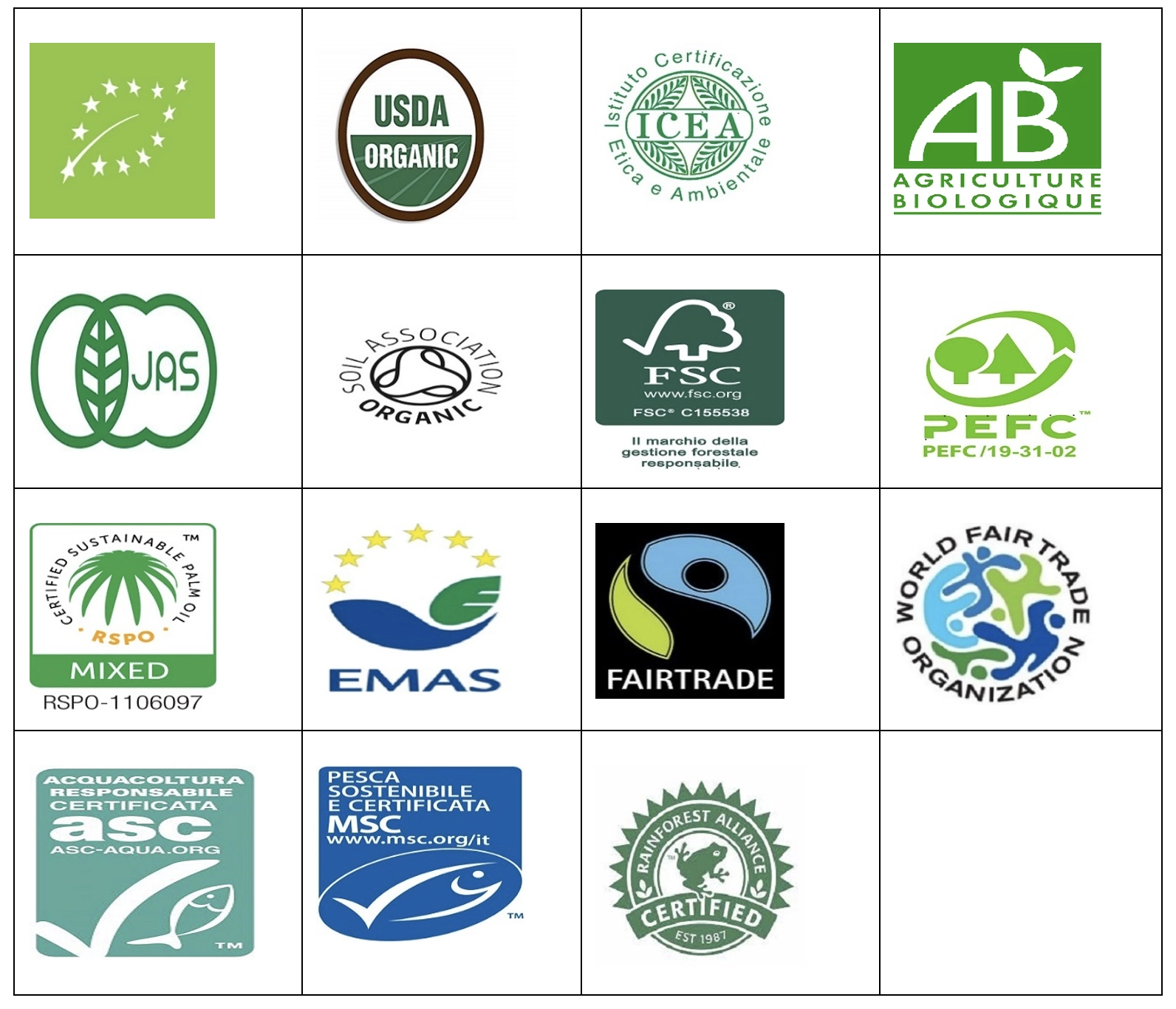
Aim of visuals: Eco-labels can be defined as a marketing communication instrument, aimed at signaling to the consumers that a product has been produced in an environmentally sustainable manner.
People: Italian adults, USA citizens, Italian students.
Method: Study 1: 760 online responses - Likert scales. Study 2: 151 USA participants. Study 3: 219 Italian students. Test materials showed eco-labels with and without text.
Effect of visuals: eco-labels should be sufficiently high in visual complexity to be visually interesting, but
low in conceptual complexity to create the same sustainability associations for any consumers.
Suggestions for design: The predominant color should be better green to increase perceptual and conceptual fluency and to signal effectively responsible products. We suggest using explanatory text such as sponsor name or words aimed at creating meanings associated to sustainability on the eco-label logos for increasing consumers’ understanding and attitudes.
Suggestions for policy: EU organic eco-label should include text such as EU-bio or EU-eco to increase its effectiveness. When eco-labels do not include text (like a sponsor name or explanatory words), conceptually complex
eco-labels are difficult to understand with consequent negative effect on consumers’ attitude.
Comment: The marketing approach aims at ‘persuasion through design’. It aims to sell, not to enable people to do things. The separation of ‘perceptual fluency’ (how easy is it to identify something) and ‘conceptual fluency’ (how easy is it to understand something) is useful. The testmaterials removed the text from the eco-labels, which reduces the external validity of the experiments.
Haramundanis K. (1996) ‘Why icons cannot stand alone’. ACM SIGDOC Asterisk Journal of Computer Documentation. 20(2), 1–8. [DOI].
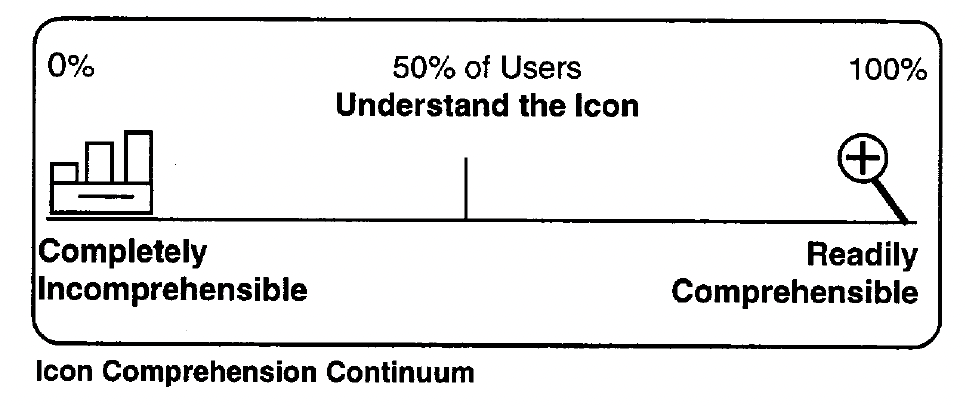
Aim of visuals: When first seen, an icon cannot be expected to stand alone, without descriptive, supporting material supplied as written text.
Method: A description of the use of icons based on the history of writing.
Effect of visuals: We must always supply explanatory text with each icon, screen widget or artifact we present. Only then can the meaning be unambiguous and the use clear to the user. However, once a user understands
the meaning of an icon from reading the supplementary text and uses the tool for a while, the supplementary
text can be removed.
Suggestions for design: Do at least informal usability testing and have good graphics designers to create final icon designs for your icons.
Suggestions for policy: -
Comment: An early description why icons on computer screens must be supported by text.
Mohamed K, Adiloglu F. (2023) ‘Analyzing the Role of Gestalt Elements and Design Principles in Logo and Branding’. International Journal of Communication and Media Science. 10(2), 33-43. [DOI].
Aim of visuals: Logos are key visual representations of a brand’s identity and play a crucial role in shaping consumer perceptions and establishing brand recognition.
People: -
Method: Analysis of the logos by the authors + a literature review of case studies.
Effect of visuals: A well-designed logo can enhance brand identity, create brand recall, and influence consumer behavior.
Suggestions for design: By strategically incorporating design principles and utilizing gestalt elements, logo designers can effectively communicate the brand's values, differentiate themselves in the market, and establish a strong brand presence.
Suggestions for policy: -
Comment: An interesting and detailed approach: applying gestalt principles to the anlysis of logos. However, the conclusion that ‘logo design has an impact on branding and marketing’ cannot follow from this approach.
Buratto A, Lotti L. (2023) ‘The impact of salient labels and choice overload on sustainability judgments: An online experiment investigating consumers’ knowledge and overconfidence’. Food Quality and Preference. 107, 104846. [DOI].
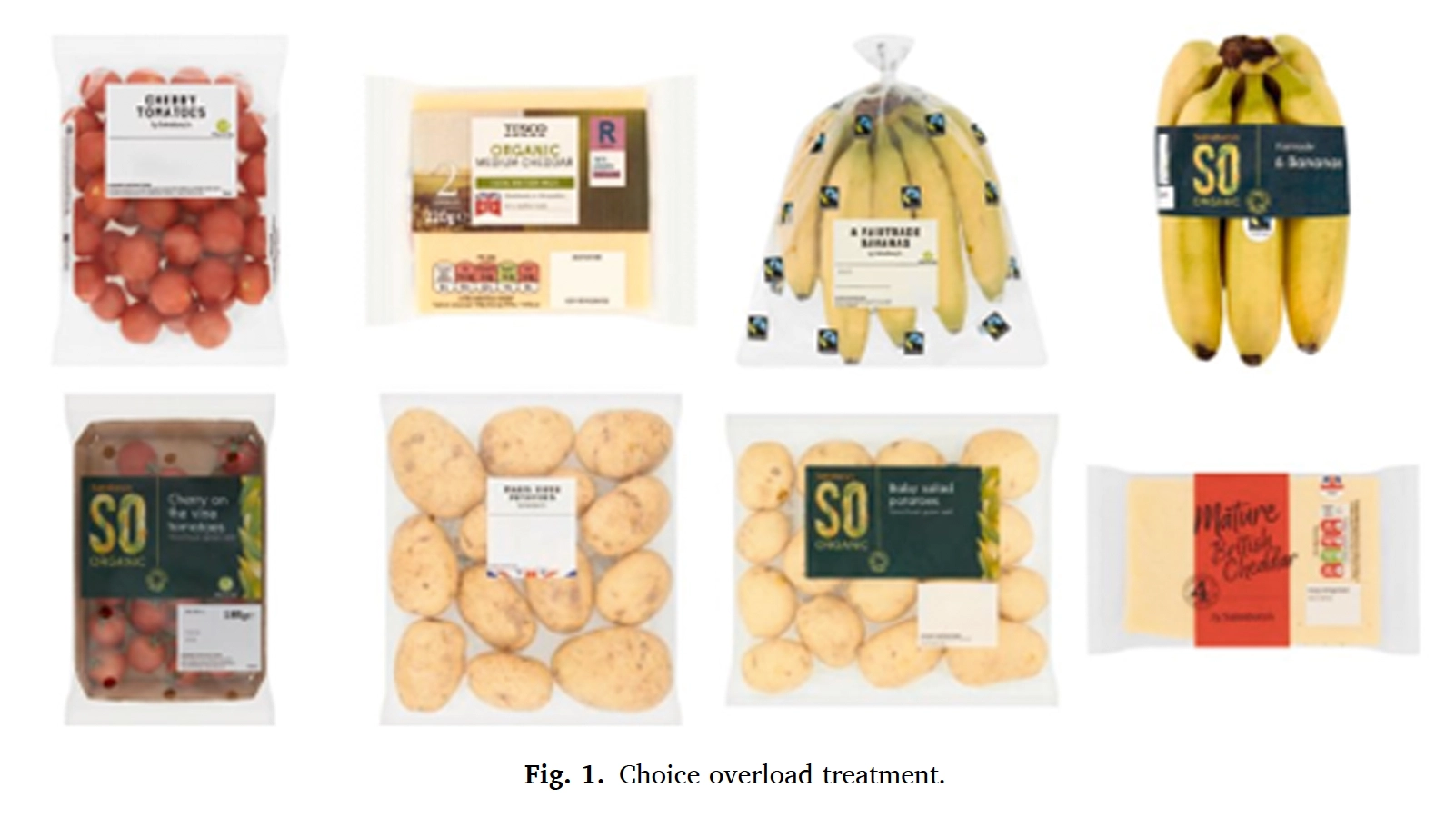
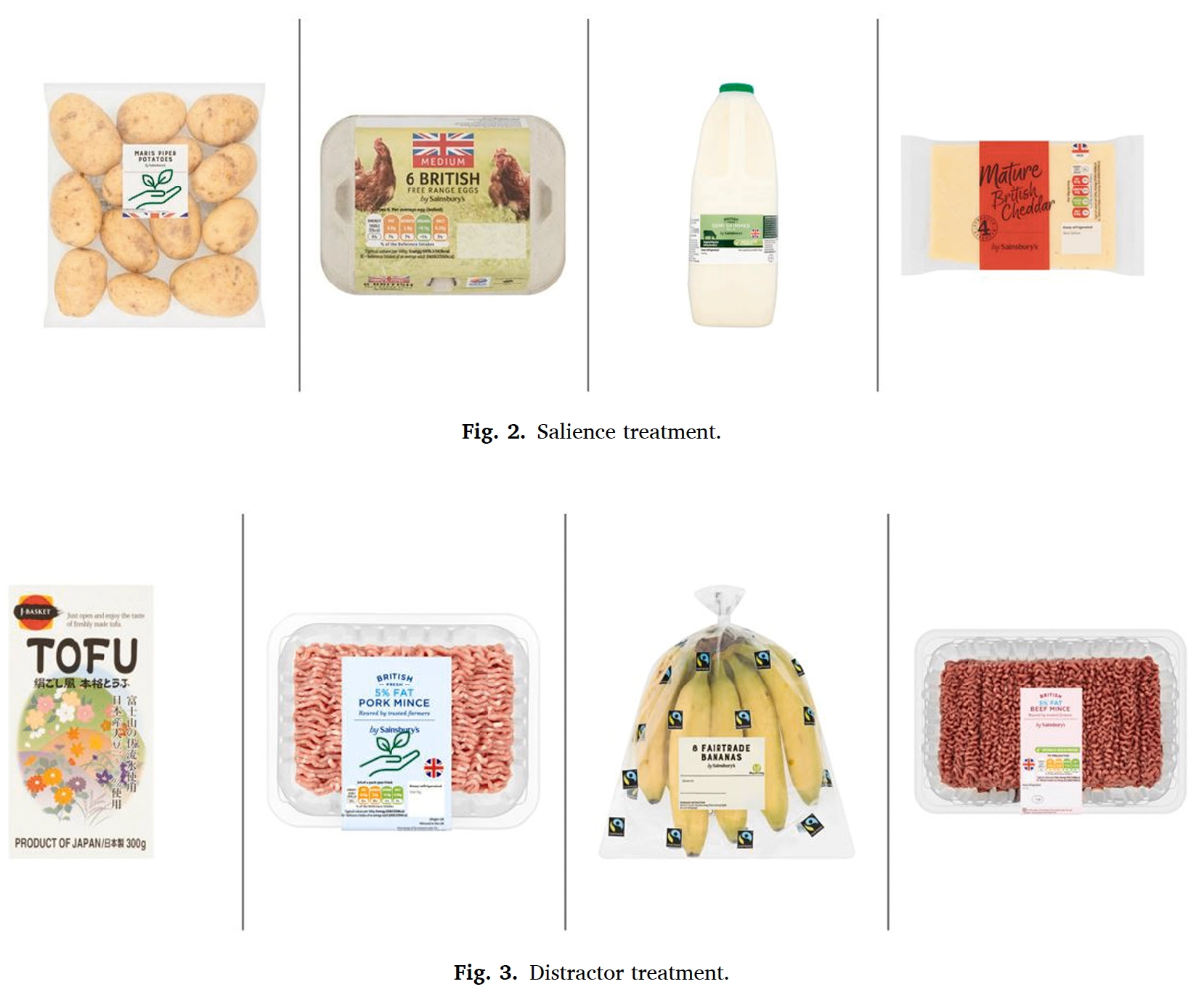
Aim of visuals: Salient truthful and untruthful green labels. [Green = sustainability, defined with the criteria of greenhouse gas emissions, freshwater and scarcity-weighted water usage, and land usage
People:
Method: Online behavioural experiment. Choice out of 4 products, or out of 8 products. Participants were explicitly asked to identify the most sustainable item amongst the ones presented to them.
Effect of visuals: Choice overload is detrimental to consumers’ judgment, but that truthful labels can help
shoppers correctly identify sustainable items.
Suggestions for design: Our analysis suggests that salience did not have an impact on consumers’ judgment accuracy.
Suggestions for policy: Great care should be taken in presenting food products to consumers to make the most environmentally friendly items stand out. Policymakers should make certain that quality checks are performed to ensure that companies do not mislead their customers by placing their own green label on a product that is not actually environmentally friendly.
Comment: The authors conclude: ‘The findings from this study suggest that labels do have an impact on
consumers’ perception of food products, especially when there are many goods to choose from.’ I'm not sure if an online survey on a very limited group of products with a ’distractor symbol’ provides new information.
Moreira MJ, Garcia-Diez J, Almeida JMMM de. (2021) ‘Consumer Knowledge about Food Labeling and Fraud’. Foods 10(5), 1095. [DOI].
Aim of visuals: Lack of consumers’ knowledge about mandatory food labeling information and different types of food fraud may impact public health
People: Portugal, 308 respondents
Method: Online questionnaire.
Effect of visuals: Over half of them stated that information provided in food labels is reliable.
Suggestions for design: Results indicated that information displayed in food labels is useful, however the way it is presented may decrease consumer interest and understanding. Respondents’ perception results could be use as guidelines by the food industry to improve food label design in order to enhance consumer understanding.
Suggestions for policy: Implementation of education programs to increase consumer knowledge about food labelling and fraud is essential.
Comment: The results look very convincing, but they are based on an online questionnaire asking for opinions and perceptions. These are no substitutes for actual relevance, findability, understandability, and usability.
Shen M, Shi L, Gao Z. (2018) ‘Beyond the food label itself: How does color affect attention to information on food labels and preference for food attributes?’. Food Quality and Preference. 64, 47-55. [DOI].
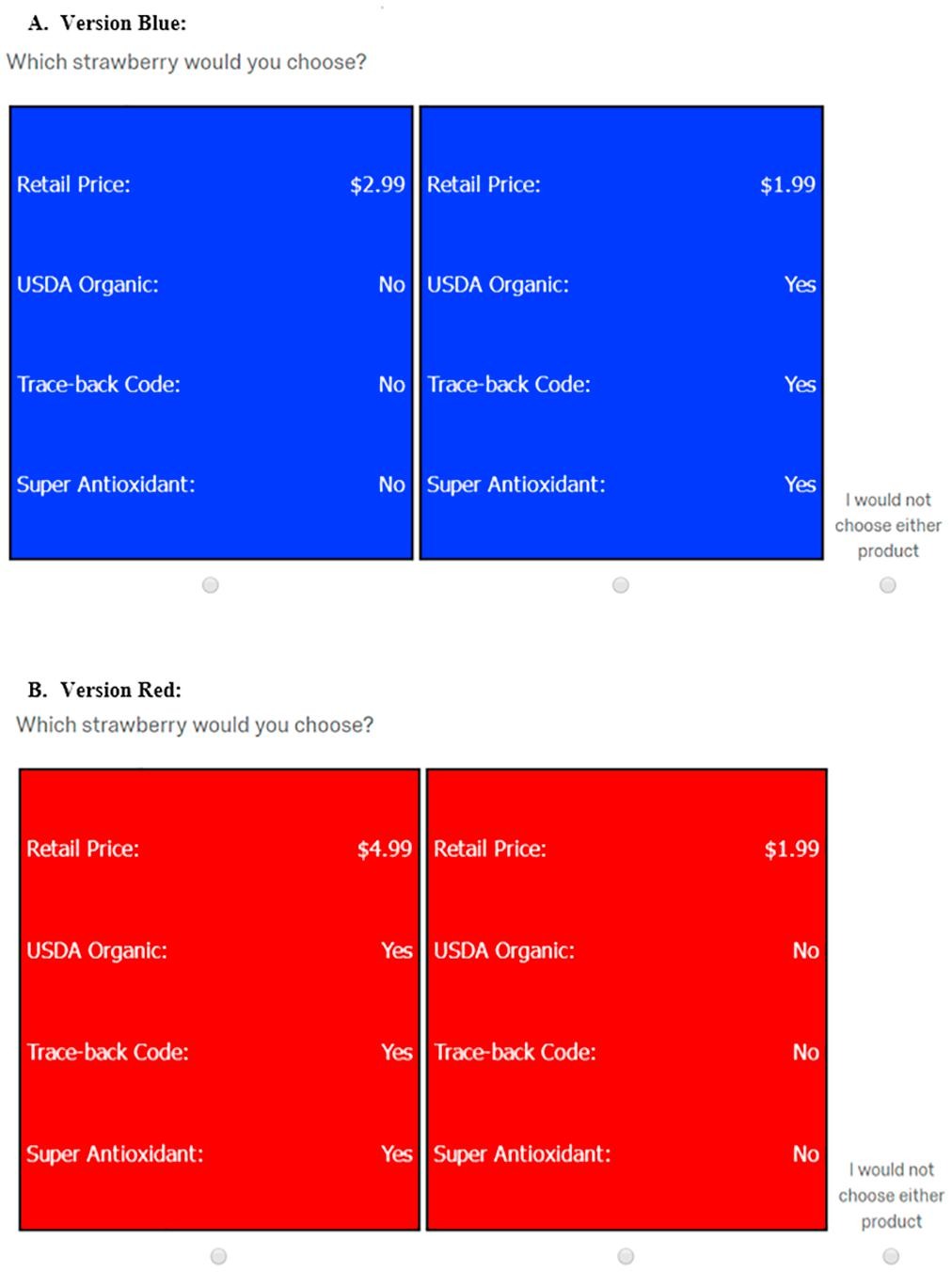
Aim of visuals: Colour of food labels.
People: 340 online responses
Method: Choice experiment
Effect of visuals: Label colours appear to influence consumers’ decision-making process and feature evaluation.
Suggestions for design: The reported findings bear important implication for the use of food labels in product differentiation or promoting healthy food choice.
Suggestions for policy: Our findings highlight the potential of label color as nudges and provide important implications for food retailers and policymakers.
Comment: The test materials are a blue and a red label with white text. The visual design is very poor and the participants had only 2 options. Yes, there is a result, but this ‘single variable testing’ has been discredited for decades. There is no practical value in these results and the recommendations generalise to unacceptable levels. This kind of research is damaging because it takes many more studies to show that these results are not useful.
Pedersen S, Benson T, Tsalis G, Futtrup R, Dean M, Aschemann-Witzel J. (2024) ‘What consumers want in a sustainability food label: Results from online co-creation workshops in the United Kingdom, Ireland and Denmark’. Frontiers in Sustainability. 4, 1342215. [DOI].
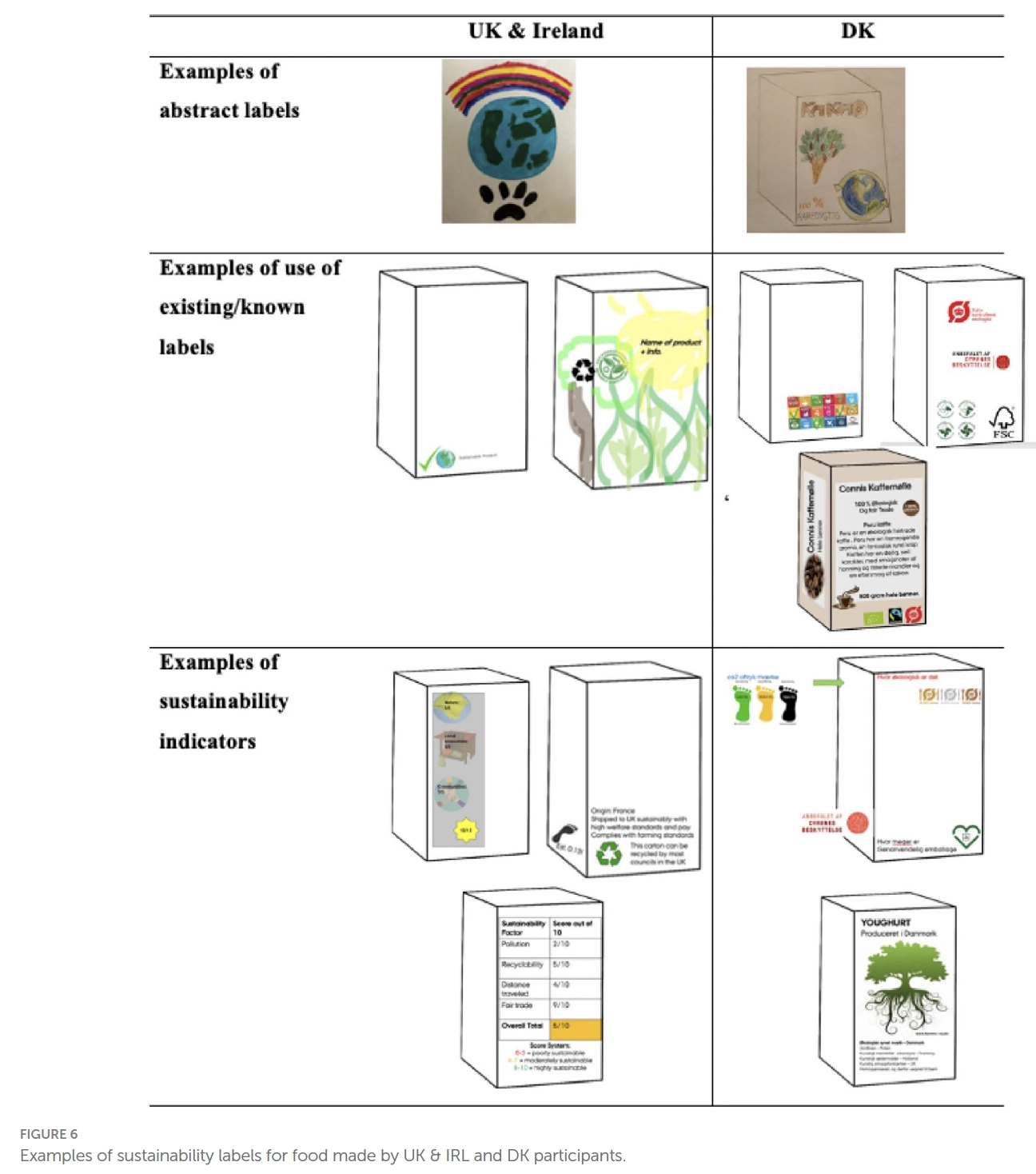
Aim of visuals: A holistic or multidimensional ‘summary’ sustainability label for food could help consumers make more informed choices.
People: 3 groups in UK and Ireland: 24 participants. Denmark: 3 groups: 21 participants.
Method: six online co-creation workshops: UK, Ireland, Denmark.
Effect of visuals: Consumers in lack information about the sustainability of food products. When it came to the more concrete assessment of sustainability in food, the results clearly showed that participants struggled with weighing the different indicators of sustainability against each other to arrive at an overall assessment of a specific food product.
Suggestions for design: The results give insights into how sustainability indicators can be communicated on food products in terms of packaging, labels and other information.
Suggestions for policy: In all countries, consumers wanted producers, retailers and policy makers to take more responsibility for communicating sustainability in food products, so the consumers could more easily be guided to enact responsible consumer behaviour
Comment: The online workshops show that people have motivated opinions about sustainable labels on food packaging. The authors conclude with the assumption that it is possible to develop a ‘summary sustainability label that is easy to read and understand. ... a huge challenge.’