 | |
| Compiled by: Karel van der Waarde 2024 | |
| | |
| |
| | |
| Colofon & notes | |
|
|
Visual labelling systems showing all materials
The following labelling systems aim to provide information about several kinds of materials:
• UK: On-Pack Recycling Label (OPRL).
• Resin identification code. (Introduced in 1988 in the USA by the Society of the Plastics industry (SPI). The numbers are listed in Council Directive 94/62/EC.)
• The Nordic system (2017: Denmark, Sweden, Iceland, Norway, Finland, Latvia and Lithuania).
• Italy (2017): UNI 11686:2017.
• France: Triman (2022).
• Netherlands (2016).
Please note: The references below are mainly descriptive. Independent empirical studies need to be added.

OPRL ltd. (2023) ‘What consumers want. 7 key research insights on engaging consumers in recycling’. Banbury: OPRL. [Website].
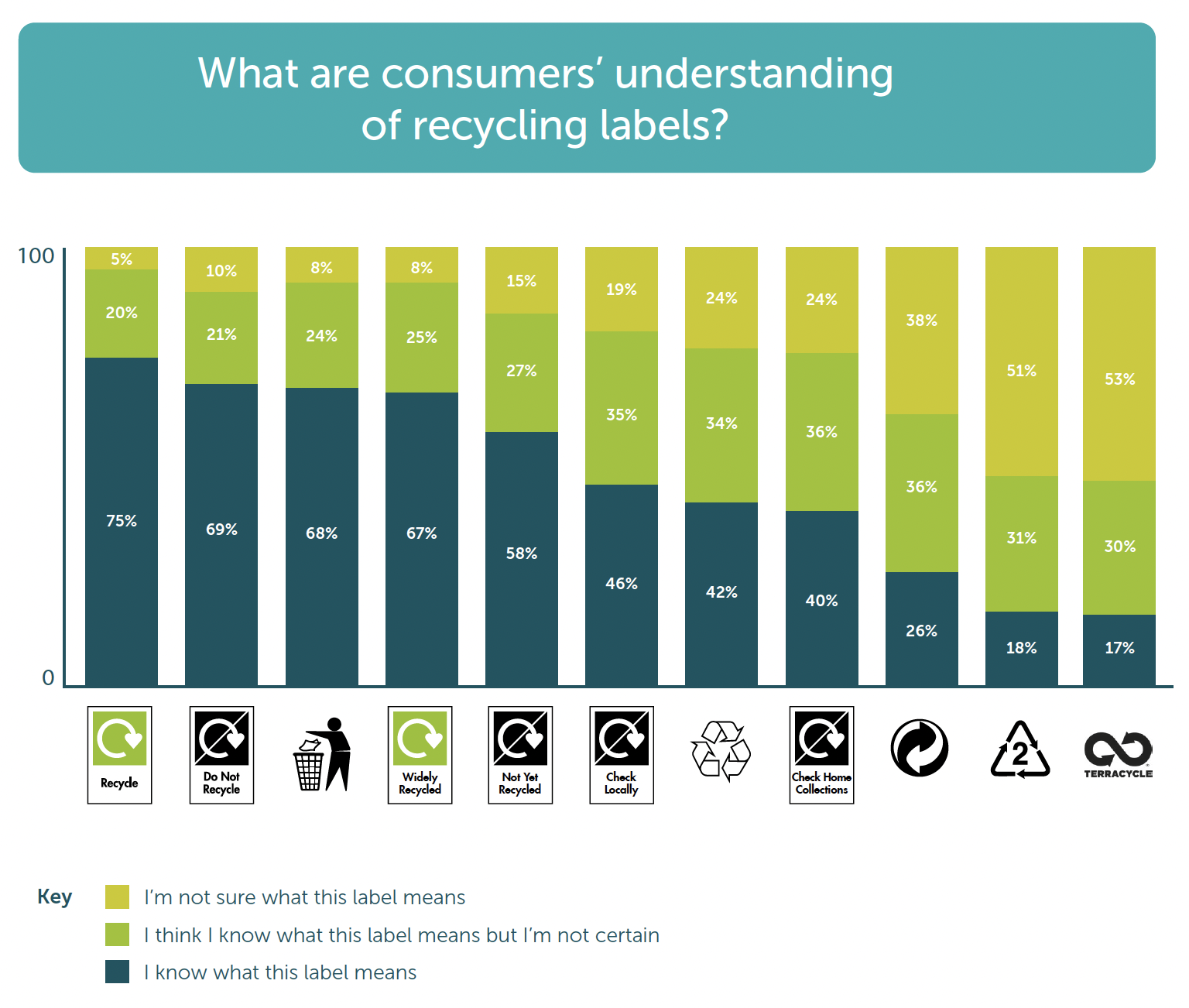
Aim of visuals: Help consumers to recycle materials.
People: 5010 consumers in England, Wales and Scotland.
Method: not mentioned.
Effect of visuals: Labels on packaging are still the No. 1 source of recycling information.
Suggestions for design: The report claims: ‘OPRL labels continue to be the most widely understood due to them being clear and consistent.’
Suggestions for policy: ‘When consumers were informed about Extended producer responsibility, 59% of them believed that 2026 for mandatory labelling on packaging wasn’t soon enough.’
Comment: The OPRL labels use a combination of text, image, and colour. The text on these labels suggest that consumers recycle, or ‘do not recycle’. Consumers only sort materials. Two streams
Nordic Council of Ministers. (2021) ‘Common waste sorting symbols in Nordic Countries’. [DOI].
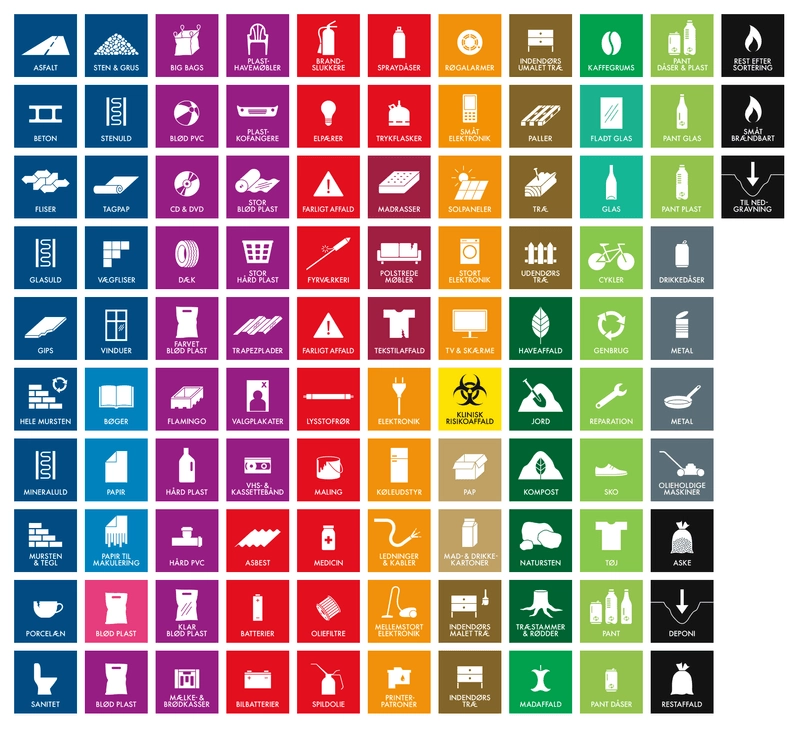
Aim of visuals: In 2017, Dansk Affaldsforening (the Danish waste association) launched a national
pictogram system (terminology, symbols and colors), which is currently used by 90 municipalities (92 %) in Denmark, a large number of companies and on more and more packaging. The pictograms are also used in Estonia.
Design by: Futu in 2017. Co created with citizens and municipalities. Based on text, icon, colour.
Comment: See also EU picto. The pictograms can be downloaded, and there is an extensive a manual. Over 100 streams, colour coded groups streams. A detailed analysis of these pictograms is necessary.
Uni. (2017) ‘UNI 11686: 2017 Waste visual elements’. [Website].
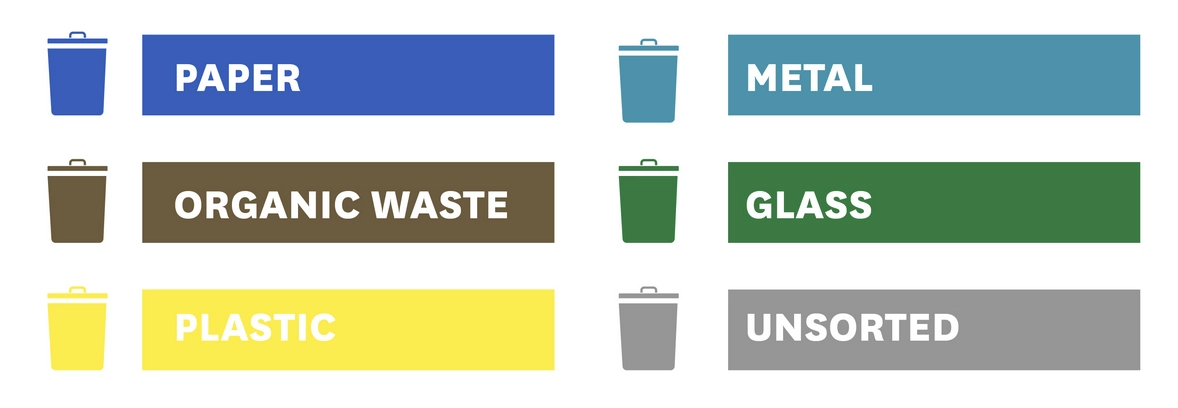
Aim of visuals: This standard defines a way of identifying the various fractions of municipal waste by means of a set of visual elements, including colours, symbols, and text. It is intended to create a single operating model to easily identify waste containters through certain visual elements.
People: -
Method: -
Effect of visuals: -
Suggestions for design: -
Suggestions for policy: -
Comment: This standard was introduced in 2017. CONAI provides more details. Six separate streams.
Citeo. (2023) ‘Sorting Info. A simplified guide to the new sorting label for household packaging and graphic paper’. Paris: Citeo. [Website].
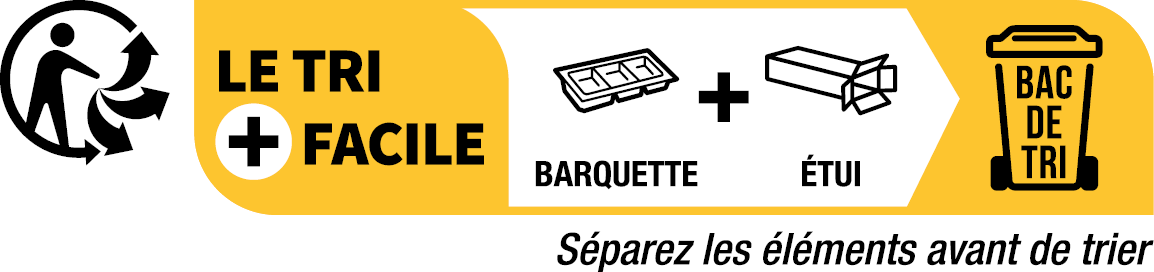
Aim of visuals: To support the rollout of sorting simplification in France, this mandatory marking encourages consumers to place all their paper, single-use household packaging and reusable or refillable packaging at home in the sorting bin or container.
People: French citizens
Method: The standard does not require any test.
Effect of visuals: The Triman logo does not indicate that the product (in this case paper or packaging) is recyclable. It simply tells the consumer that a sort or bring rule applies to the product. In accordance with Article 17 of the AGEC Law, the logo is now mandatory and needs to be placed alongside the Sorting Info (i.e. the sorting instructions).
Suggestions for design: Page 20 describes the ways pictograms need to be drawn. Standard pictograms are available for registered companies.
Suggestions for policy:
Comment: The Triman guide allows for three options: pictogram only, text only, or text & pictogram. The guide warns: ‘The texts and the pictograms of the containers have been approved by the French authorities and may not be changed or customised.’ Two separate streams.
Rijkswaterstaat. (2024) ‘Richtlijnen voor gebruik. Kleuren, namen en pictogrammen voor afvalscheiding’. [Website].

Aim of visuals: The standard set of colours, names, and pictograms is a result of a long process. There are several research reports available on the website of the Dutch government.
Designer: Buro Mijksenaar. A motivation for the designs is available.
Comment: A thorough research based development of labels for material sorting. Five separate streams.