 | |
| Compiled by: Karel van der Waarde 2024 | |
| | |
| |
| | |
| Colofon & notes | |
|
|
Machine readable codes
An label is likely to include some machine readable codes. Barcodes, QR-codes, Data-Matrices are a few examples. This page cannot give detailed arguments of the benefits and pitfalls of all sorts of machine readable codes. It would be nice to aim for a single code that can link to different digital systems to:
• indicate the price of an item
• link to a website with detailed information
• provides a ‘track and trace’ option
• takes little space and ink on a label (= avoid several codes on the same label).
And it might be possible to consider ‘image recognition software’ or ‘object detection software’ too?
Main question for this page is: ‘Are these codes used by people?’

Data Matrix:
GS1 standards: A set of standards.
QR-code:
ISO Quick Response (QR) standard: ‘Information technology — Automatic identification and data capture techniques — QR Code bar code symbology specification’.
Image recognition software:
YOLOv8: An example of real-time object detection and image segmentation model. There are plenty of others.
Li P, Yang J, Jiménez-Carvelo AM, Erasmus SW. (2024) ‘Applications of food packaging quick response codes in information transmission toward food supply chain integrity’. Trends in Food Science & Technology. 146, 104384. [DOI].
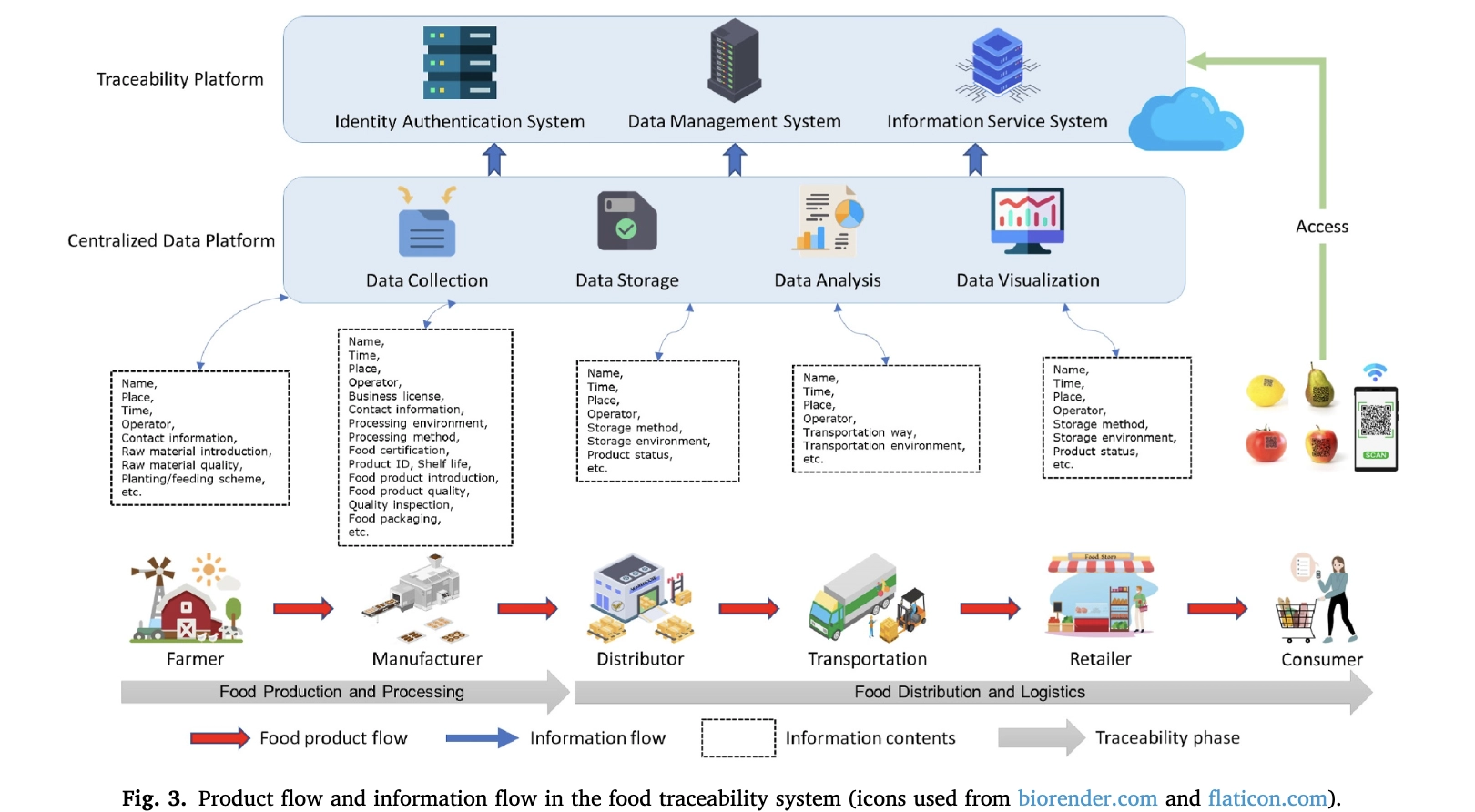
Aim of QR-code: A QR-code builds a kind of food information chain to provide the information on processing, transportation, and sales of the food, which can increase the level of information transparency of food.
Method: A description of the benefits and risks of QR-codes on food packaging.
Effect of visuals: Although almost all QR codes have prompt words, such as ‘Scan QR code for more information’ and ‘Scan me’, they will still be ignored by many consumers because of their absence of understanding of or familiarity with QR codes.
Suggestions for design:
Suggestions for policy: From a legislative point of view, customized legislation aiming at food supply chain integrity needs in different countries can promote further implementation of QR codes.
Comment: A scannable code on labels seems essential to make a link between packaging and digital resources.
Guijarro M, Bayon J, Martín-Carabias D, Recas J. (2024) ‘A Multi-Stage Method for Logo Detection in Scanned Official Documents Based on Image Processing’. Algorithms. 17, 170. [DOI].
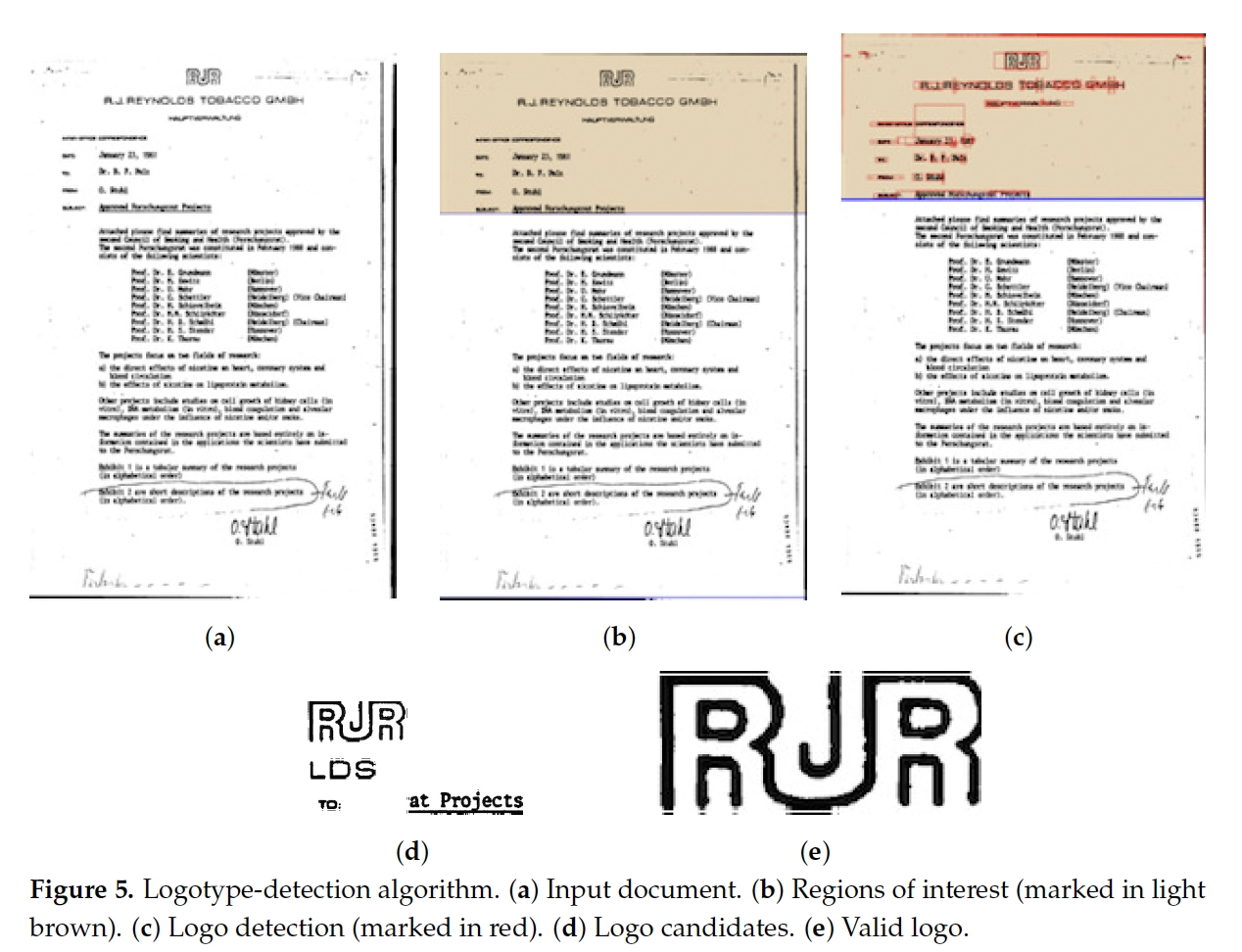
Aim of article: Automatic detection and recognition of logos in documents
Material: 1291 documents
Method: automatic logo detection
Effect of visuals: 98.9% precision, low percentage of false negatives
Comment: This type of software could be used to detect pictograms on labels and provide a direct link to a relevant website for more information.
Chen CC, Shu D, Ravishankar H, Li X, Agarwal Y, Cranor LF. (2024) ‘Is a Trustmark and QR Code Enough? The Effect of IoT Security and Privacy Label Information Complexity on Consumer Comprehension and Behavior’. Proceedings of the CHI Conference on Human Factors in Computing Systems (CHI ’24). May 11–16, 2024. [DOI - not published yet].
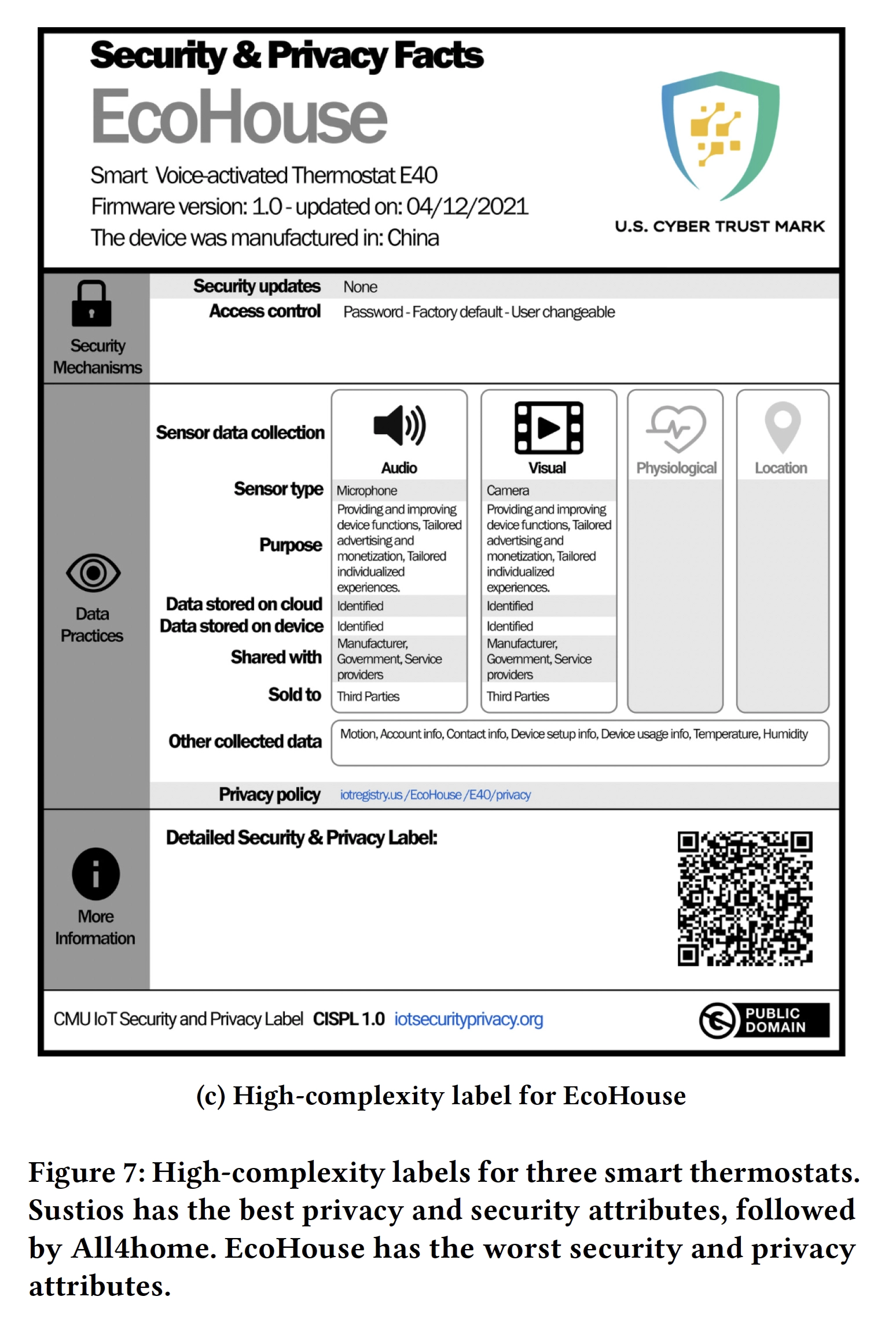
Aim of visuals: to help consumers access reliable security and privacy information about Internet of Things (IoT) devices when making purchase decisions.
People: 518 IoT purchasers
Method: Online survey: comprehension and preferences for three labels of varying complexities, with and without an educational intervention.
Effect of visuals: Participants favored and correctly utilized the two higher-complexity labels, showing a special interest in the privacy-relevant content. Our findings show that participants strongly favored the higher-complexity labels and were reluctant to scan the QR codes, regardless of age, gender, or technical background.
Suggestions for design: Our participants had a strong preference for higher complexity labels and were almost unanimously unsatisfied with the lowcomplexity label. We found that young people aged 18-35 were less willing to scan QR codes compared to the other two age groups.
Suggestions for policy: Prior efforts such as the Energy Star and Energy Guide Labels were supported by
multi-year educational campaigns to inform consumers. IoT labels are arguably more complex and might require even larger investments in education.
Comment: About the QR-code: 'most did not scan and said they would be reluctant to do so in the future. Some mentioned the inconvenience of scanning, while others were concerned that QR codes might not be secure.